
Filing Income Tax Returns (ITRs) is a yearly responsibility for many taxpayers — and staying updated with deadlines is crucial to avoid last-minute stress or penalties.
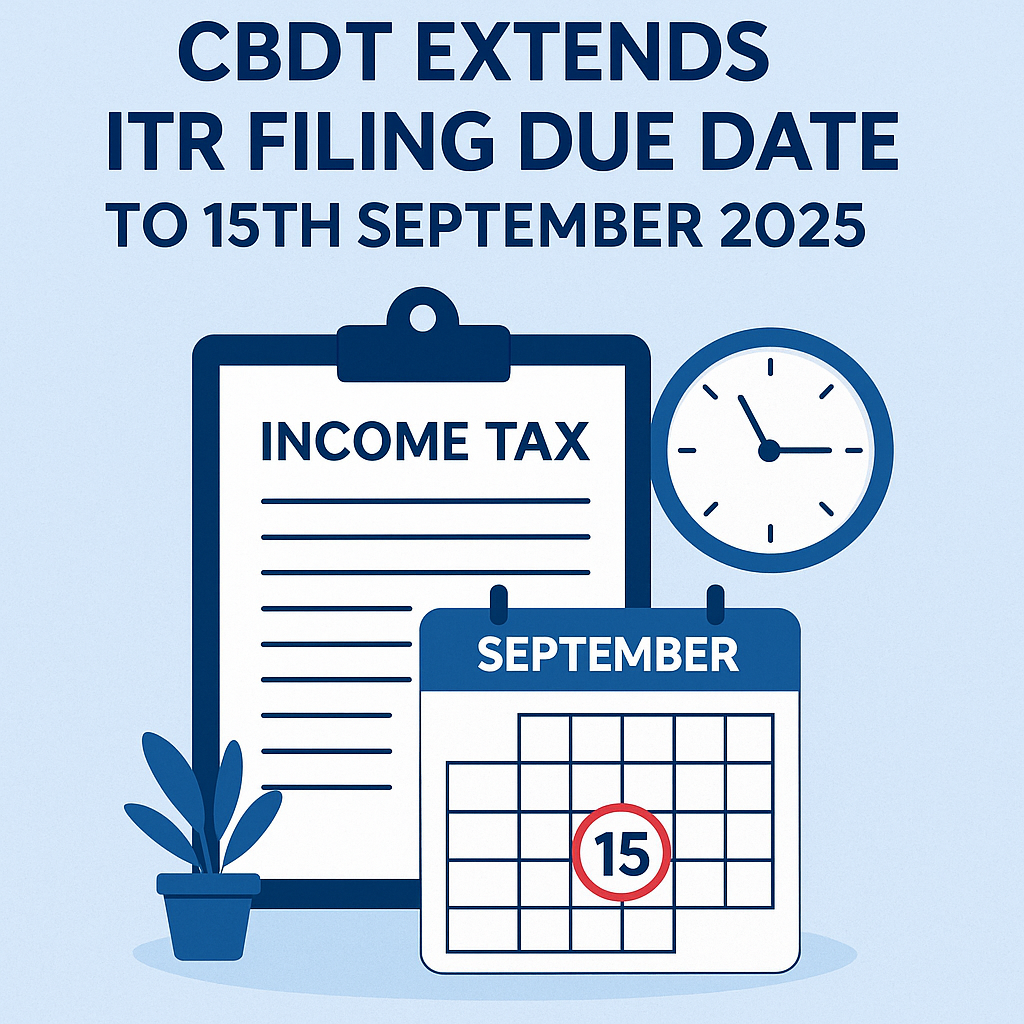
In a welcome move, the Central Board of Direct Taxes (CBDT) has extended the ITR filing due date for Assessment Year (AY) 2025–26 from 31st July 2025 to 15th September 2025.
Let’s understand what this means and how you can make the most of this extra time.
Why the Due Date Was Extended
The ITR forms for this year have gone through major updates. These changes are aimed at:
- Simplifying how you report income and deductions
- Making tax filings more transparent and aligned with new regulatory expectations
- Enhancing the utility formats used by taxpayers and professionals
But these changes also mean extra time is needed to develop, test, and roll out the ITR filing systems.
Also, TDS credits (from Form 26AS) — which many taxpayers wait for — are expected to reflect only in early June. With the original deadline being 31st July, there would have been very little time to reconcile and file returns accurately.
Recognizing this, the CBDT has stepped in with an extension.
What Has Changed?
| Taxpayer Category | Old Due Date | New Due Date |
|---|---|---|
| Individuals (Non-Audit Cases) | 31st July 2025 | 15th September 2025 |
Note: Tax audit and transfer pricing deadlines remain unchanged as of now.
What Should You Do Now?
If you’re someone who usually rushes through return filing in July, this extension gives you room to:
- Organize your documents
- Match your Form 26AS and AIS
- Reconcile capital gains, interest income, or multiple Form 16s
- Reach out to your CA early for guidance
It’s still advisable not to wait until September. Timely filing helps avoid interest under Section 234A and ensures faster refunds, if any.
A Word of Caution
Remember, the extension applies to filing your return — not necessarily to payment of any advance/self-assessment tax. So, if there’s tax payable, that should be addressed promptly to avoid interest.
Final Thoughts
Extensions like these are helpful, especially in transition years with changes in filing systems. But they also bring an opportunity to shift from last-minute panic to planned compliance.
If you need help preparing your return or understanding how the changes apply to you, do reach out to your tax advisor.
Disclaimer:
This blog post is intended for general informational purposes and reflects updates as notified by the Income Tax Department. It does not constitute a solicitation or professional advice. Readers are encouraged to consult a Chartered Accountant for case-specific guidance.
By CA Anand Teertha G